



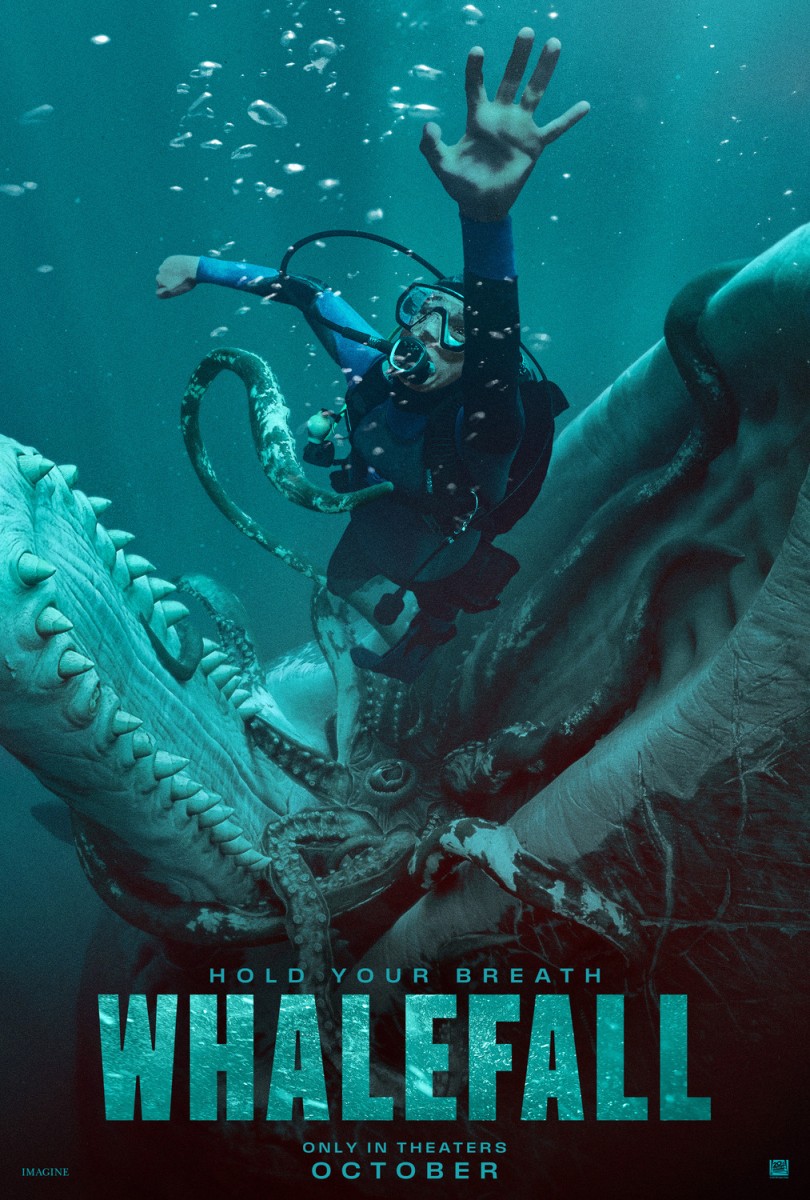
Rating:
Summary: Claustrophobic, tense, but the story of finding closure and facing up to the past, inside a whale, doesn't translate as well from the book to the screen.
"Whalefall" tries to tell a story of grief, the past, and finding closure. All while set inside a whale, and the struggle against time to escape. "Whalefall" does the latter well, but takes a few missteps in the former.
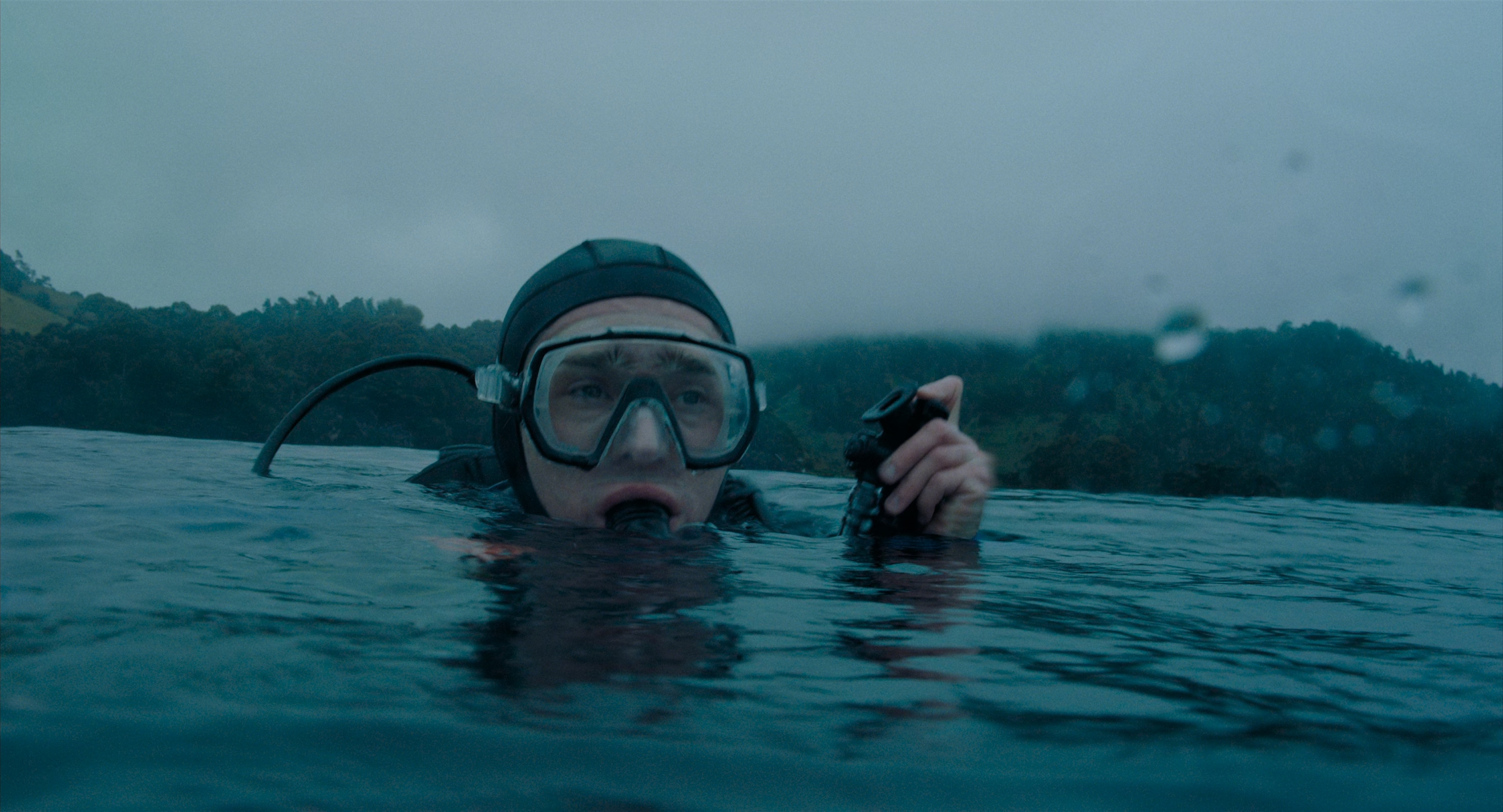
Austin Abrams stars as Jay Gardiner, a grieving son who has returned home to try to find the remains of his father (played by Josh Brolin in classic Josh Brolin fashion), who took his life a year ago by jumping into the ocean with weights. On the dive to recover the remains, Jay gets swallowed by a sperm whale, and with only an hour of oxygen, he must find a way to survive while trying to come to terms with his relationship with his father. If that last part seems a bit out of place, you're not wrong, and while the book from which this movie is based gracefully approaches this, there's less leeway to do this successfully in this film, and it suffers for it. Some questionable choices set up the predicament, which doesn't really help the film get off to the best start.
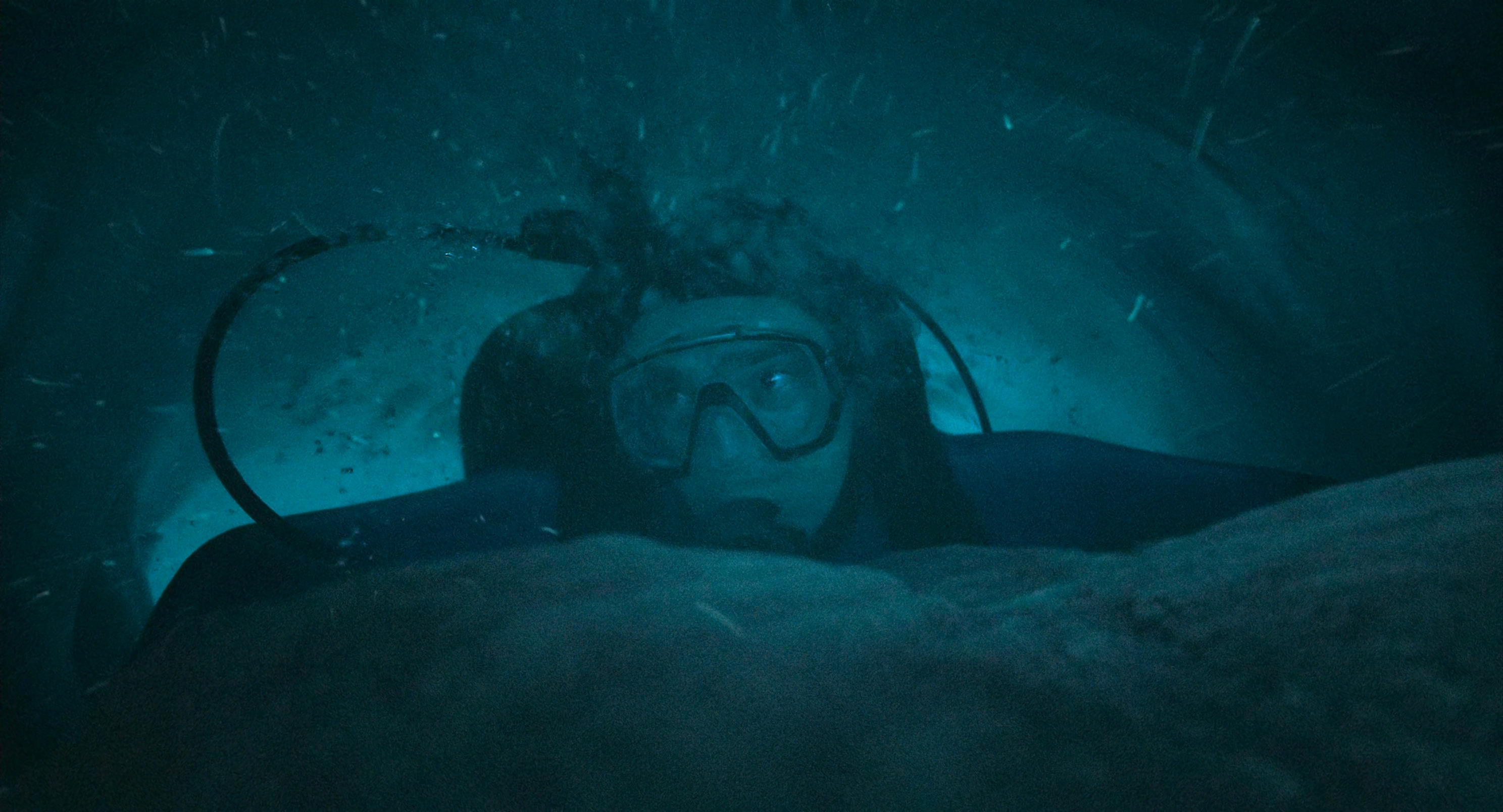
Almost all of the screen time is occupied by Austin Abrams, who does an admirable job with the less-than-admirable script by Brian Duffield and Daniel Kraus, based on the book of the same name by Daniel Kraus. The claustrophobic and tense scenes inside the whale are interspersed among flashbacks and imaginary scenes as Jay tries to find closure with the difficult relationship he had with his domineering father, and the cut back and forth doesn't always work. I don't know why, but I kept on thinking back to the movie "Only the Brave" - everyone knew what the movie was leading up to, but the story is told in a linear fashion, and it's left until the last act to methodically go through the entire ordeal. I just felt some of the flashback scenes could have been front-loaded, so we get fewer interruptions in the gripping final half hour of the film where we can fully concentrate on the escape and the attempt to find closure. Instead, the last act goes a bit too schmaltzy, to the point where it undermines the gritty realism in earlier in the film. Again, books have it easy when it comes to this kind of stuff.
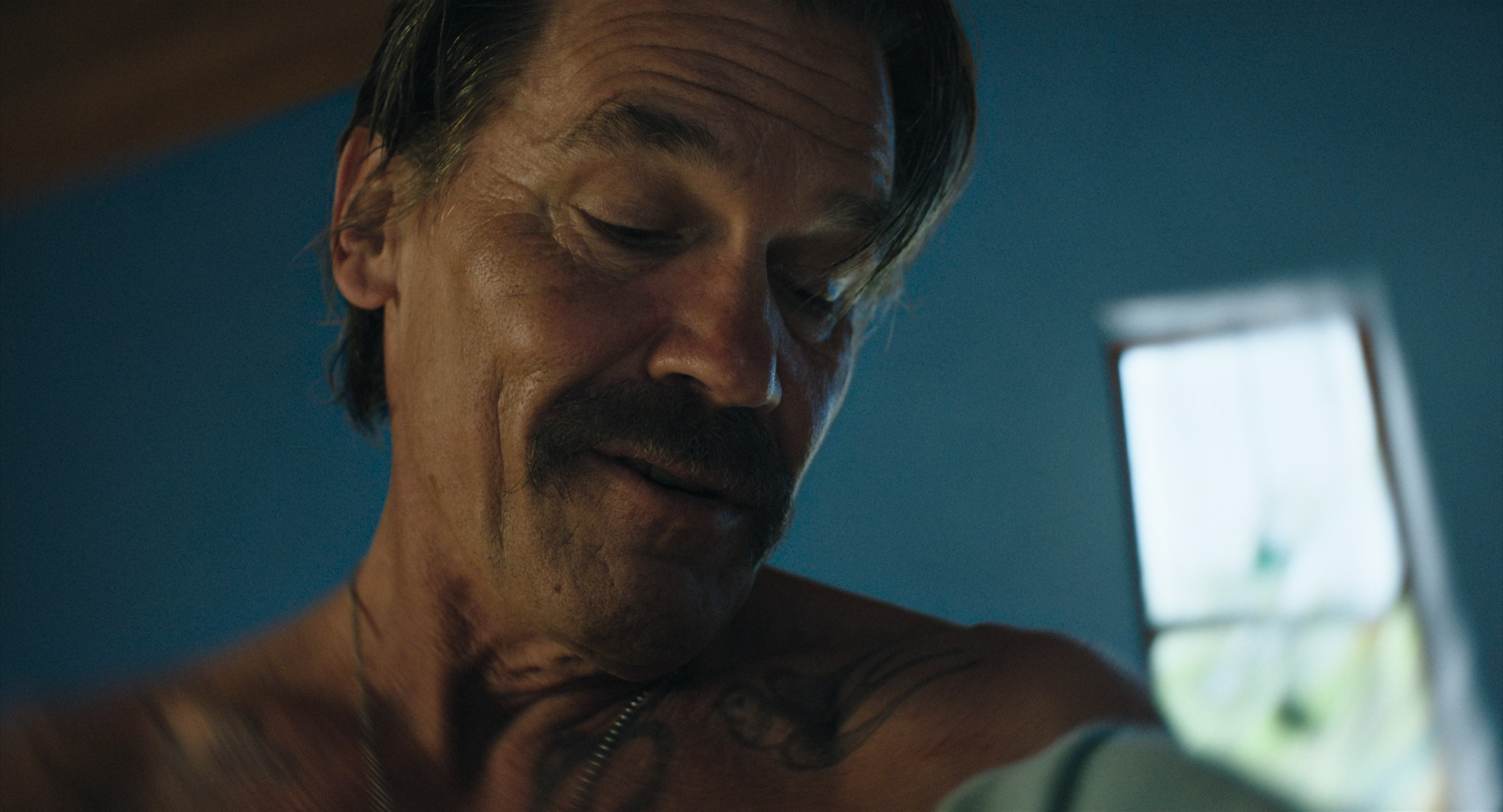
Again, Abrams does the best he can with the material. Josh Brolin plays the harsh Dad, a man who tormented Jay, who was never going to live up to expectations. The still delightful Elisabeth Shue and a few others have some minor scenes, but are otherwise peripheral to the story.
Director Brian Duffield does some things well, but is seriously hampered by the source material, plus the difficulties in showing how a human being would need to navigate the internals of a whale. I felt the need for some kind of basic anatomy lesson about whales just to figure out where the danger was and what the potential safe exits are. That chapter from "Pinocchio" was not instructive enough. The fact that the book relied on so much inner monologue always meant that this would translate poorly to the screen, and the decision to have Austin Abrams say some of the things he's thinking out loud feels out of place, especially since he's supposed to be conserving energy and oxygen, and he's having to say his lines while biting on a scuba mouthpiece.
The sets, or set is actually kind of amazing, recreating the innards of a whale. Now I've never been inside a whale, and after watching this movie, I hope I never get the chance to, but you never feel like you're watching a guy squirm around in a squishy box, well, not all the time anyway.
I never felt bored watching Whalefall, and I have renewed respect for the ocean and its many lifeforms after watching the film (ie. never going anywhere near whales ever again). I think using a life-and-death situation to come to terms with the past is not a bad idea, but I just felt it could have been executed a bit better.
"Whalefall" is in Australian cinemas on 15 October 2026. Australian streaming release date: TBA
